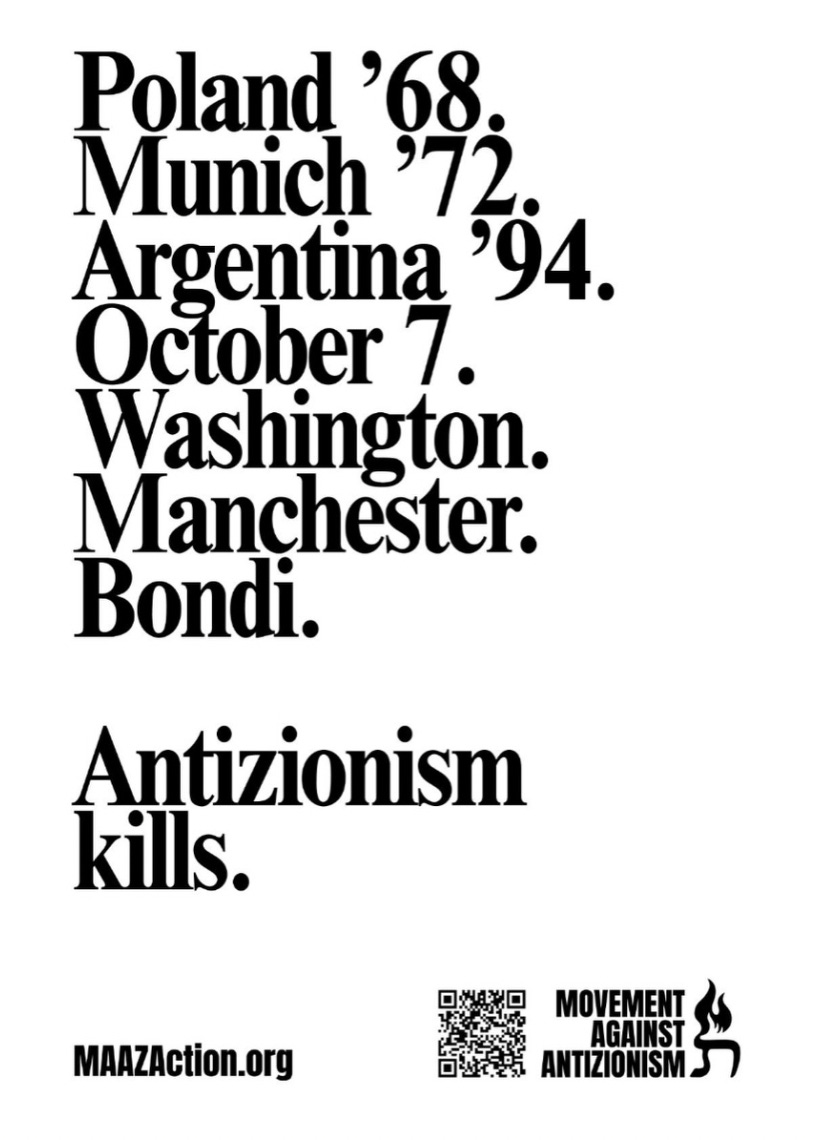
Hard Lines
Why fear, grief, and reality no longer fit neatly into progressive language.

Let’s get a few things straight.
I am guided by humanitarianism, free speech, and critical thinking, principles I know many of you share. If you’re preparing to lecture me on the number of Palestinian casualties, don’t.
I’m not criticising the plight of civilians caught in tragedy. I’m criticising the movement’s failure to adequately condemn antisemitism within its ranks, the intellectual dishonesty of erasing Hamas’s responsibility, and the dangerous logic that treats hatred toward Jews as an inevitable or justified response to events thousands of miles away.
I shouldn’t have to declare my support for Palestinian humanity any more than I should have to announce I support Aboriginal rights while fighting for public land access. But most of you don’t actually know me. You know a digital version of me, and I like to think the nuance gets lost in translation from person to pixel.
I can condemn civilian suffering and still call out what I see as a problematic movement. I can hold both thoughts simultaneously. Some people don’t agree, fair enough. I want to talk about it.

But don’t do this. Honestly, if you lose all respect for someone over a disagreement about timing or framing, that says more about how you engage with people than it does about me.
I wonder if the urge to just fire messages and then block me (which a couple of people recently did) isn’t really about race, religion, or ideology at all, but about how we have been conditioned to communicate. We share memes, repost infographics, and perform our politics for an audience. We’ve replaced actual conversation with digital signalling that usually only goes one way (I’m guilty of doing that right now).
It’s a real tragedy of the digital world. We are losing the ability to disagree and to engage in conversation that might be a bit uncomfy, or god forbid, require some backpedalling. We’re so busy curating our feeds and believing everything that scrolls our way that we’ve forgotten how to address the elephant in the room or even stay in the room long enough to notice it’s there.
What we are seeing now is an unprecedented scale of misinformation and disinformation, driven by viral content from all sides. The speed, reach, and emotional force of this material far exceed anything we have seen in previous conflicts. With that comes a level of emotional manipulation that short-circuits critical thinking.
We need to take responsibility to verify what we share and recognise how viral content is being weaponised to justify violence.
My primary concern with this piece is that Jewish communities around the world should not face consequences for the actions of the Israeli government.
Yet I keep encountering a troubling argument that antisemitism is somehow “inevitable collateral damage” of Israel’s actions in Gaza, that if it weren’t for Netanyahu, there wouldn’t be such incidents.
This framing sanitises bigotry by treating it as a natural consequence rather than a choice. It removes moral agency from those who commit antisemitic acts. We would never accept this logic for any other form of discrimination and harassment.
Imagine calling Islamophobia after the terrorist attack “inevitable” when the opposite actually happened. People were incredibly quick to jump on the bandwagon of “we can’t let this fuel Islamophobia” and “their actions do not represent all Muslims,” but where was this gold standard in the last two years?
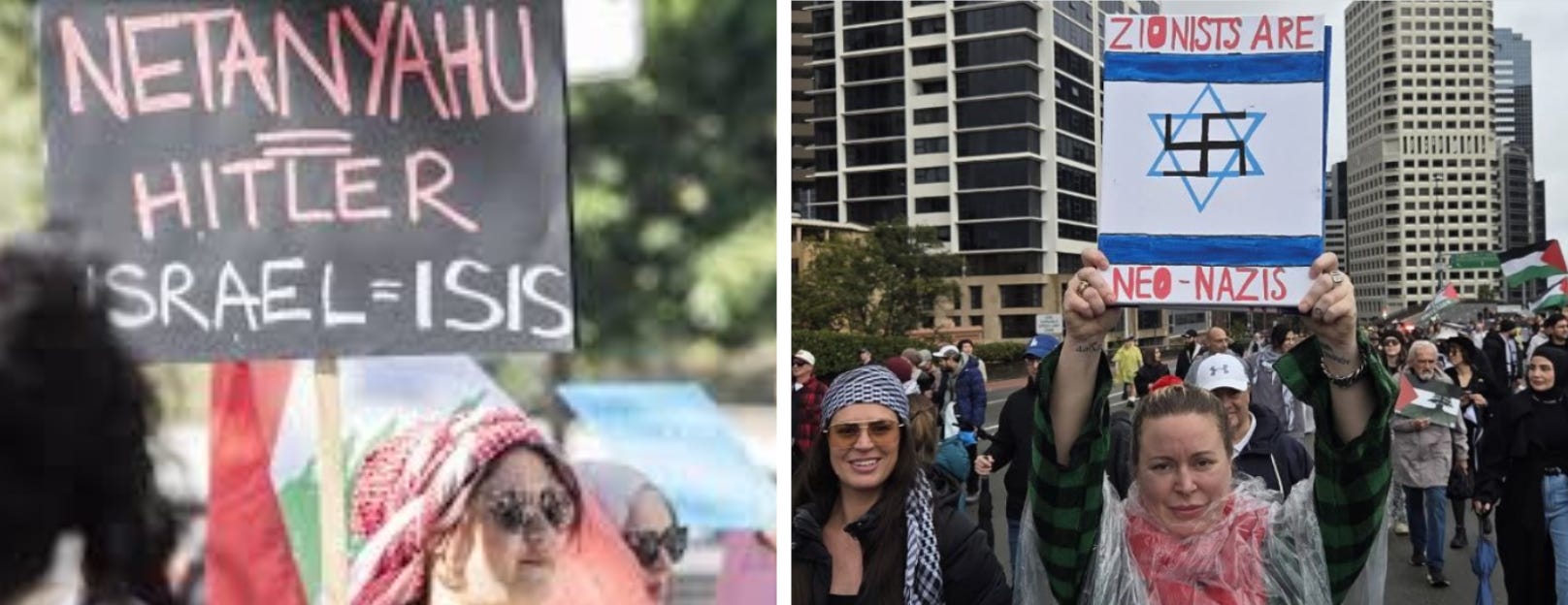
Antisemitism is not collateral damage; it's a decision made by individuals who are responsible for their own actions.
Blaming Netanyahu for hate crimes in Sydney or Melbourne shifts responsibility away from the actual perpetrators and validates the premise that Jews worldwide are collectively accountable for Israel.
I have felt a growing sense of unease with how segments of the pro-Palestine movement have failed to adequately distance themselves from extremist ideologies in these last two years, creating space for antisemitism to grow unchallenged.
At the same time, we’re witnessing an emboldened far-right movement, with white supremacists and neo-Nazis using immigration as a pretext for their racism, though their true intentions are transparent.
More broadly, I’m frustrated with how media, governments and institutions constantly frame issues as binary conflicts between groups, manufacturing divisions and forcing people to choose sides when the reality is far more nuanced.
Some people have even accused me of doing this by making links between the Bondi tragedy and the pro-Palestine movement - but I think avoiding these conversations doesn’t make the divisions disappear, it just lets them fester beneath the surface. Since when did acknowledging a problem become worse than pretending it doesn’t exist?
Imagine a moral seesaw - as progressive movements push harder in one direction, the centre shifts, and what was once moderate begins to look conservative or radical. Each side adds weight to tip the balance back their way.
It’s not the first time political polarisation has been used to create an action-reaction cycle where movements on one side of the spectrum trigger countermovements on the other, creating escalating extremes while hollowing out the middle. I’m not assigning blame to either side, but I do think progressive movements have sometimes pushed too hard and too fast, creating backlash.
I think both the left and the right have something in common. We’re all trying to find a balance. The woke left, and the woke right. I’m sure both extremes wake up in the morning and think, ‘I am doing the right thing, and it’s necessary to stabilise society.’”
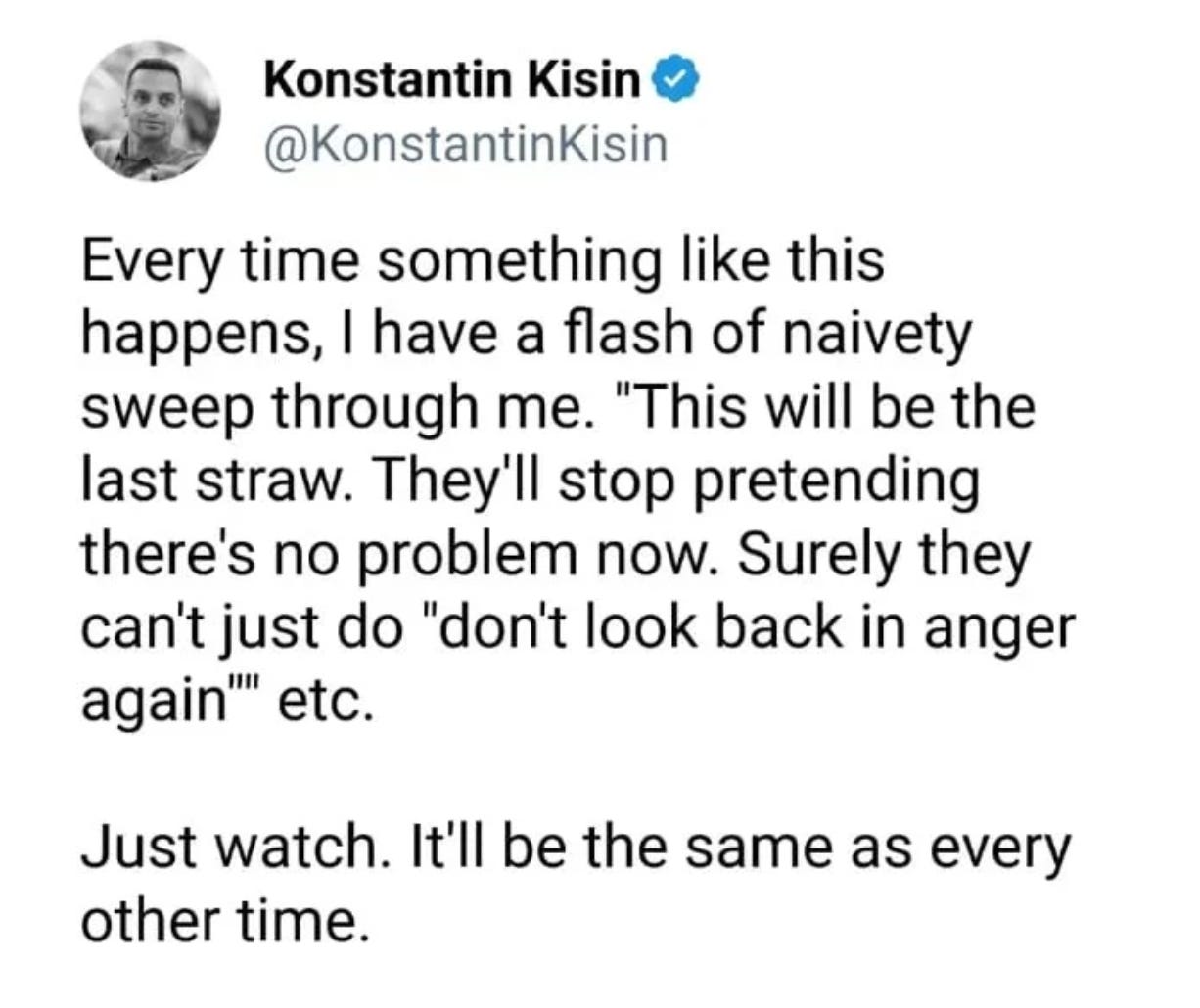
Honestly, I’ve lost count of how many times I’ve been cancelled by people in my own circles for not being radical enough, not advocating the right way, or not doing absolutely everything demanded of me.
Some have even tried to weaponise me against other allies, people who are genuinely trying to grow and learn, and unsurprisingly, this has only created unnecessary barriers and tensions. I’ve never believed in using aggression, anger, or veiled threats to force an outcome.
Imagine me, standing in front of a truck full of pigs, outside a slaughterhouse in my fiercely animal activist era. There’s nothing like the stench of decaying flesh and dying squealing animals to really get you fired up - but I never gave myself permission to take out my anger and pain on the truck drivers or the security guards or even the slaughterhouse staff.
Who am I to judge their chosen employment and how they ended up there? I was angry at the institution, at the systems that perpetuate suffering. Taking out my frustration on the people just trying to earn a living, people with their own stories and struggles, would have been both morally wrong and strategically counterproductive or worse, made me part of the problem.
Do I think forceful advocacy and campaigning are sometimes necessary? Absolutely, but not at the expense of individuals who have nothing to do with the issue at hand, or in my case, climbers who have exercised their democratic right by choosing to live in Natimuk, next to Mount Arapiles, because of the lifestyle. People who have found ways to support their livelihood under a system they did not design.
I was reminded of this last year after receiving a letter that declared, with absolute certainty, that climbers who either dared to oppose the draft management plan, or express sadness over the proposed rock climbing bans, were guity of a colonial act.

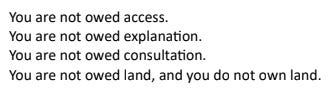
This is what activism sounds like when it loses its target. When the language meant to challenge power is redirected toward ordinary people who did not design the system, who are not policymakers, who are often just trying to live decent lives within the world they inherited.
I also feel like the language we use to talk about society has been corrupted. Terms like diversity and inclusion once meant celebrating differences while recognising our shared humanity.
Now they increasingly suggest our differences are unbridgeable, that understanding across identity lines is futile.
The word community was used to describe what connected us to our literal neighbours (you know, the person you ask to borrow a lawnmower). Now it marks the boundaries that separate us.
Just last month, the so-called ‘war on Christmas’ reared its head again. While the UAE (a deeply Islamic nation) plastered “Merry Christmas” across its shopping malls and tourism advertising, clearly unapologetic about cultural boundaries, the Diversity Council Australia warned against centring Christmas language at all, reinforcing the strange Western impulse to erase its own cultural references in the name of progress while collapsing into moral panic.
It points to a microcosm of a larger dysfunction playing out across Western democracies: the slow, systematic dismantling of cultural touchstones in the name of inclusion.
These micro-aggressions against tradition chip away at the ordinary rhythms that anchor people’s lives. When everything becomes neutralised, sanitised, and made deliberately vague, everyday citizens are left with a low-grade unease they can’t quite articulate, and what does the progressive left insist they do with this feeling of unease?
Their traditions haven’t been violently opposed; they’ve simply been... downgraded in a way that makes it very difficult to oppose and rendered morally offensive.
This represents a fundamental corruption of what inclusion was supposed to mean. The original promise was about equity: raising the floor so everyone could participate fully in society. Instead, we’re systematically lowering the ceiling. Rather than bringing people up, we’re flattening everything down to the lowest common denominator.
Consider the pattern: Australia’s Prime Minister couldn’t call the Bondi attack what it obviously was. Parks Victoria refuses to acknowledge the glaring human rights conflict between protecting cultural heritage sites and maintaining public access to nature. The response to genuine tension isn’t resolution, it’s obfuscation. Pretending conflicts don’t exist doesn’t make them disappear; it just allows resentment to compound beneath a surface of forced politeness.
This isn’t about endorsing authoritarianism or abandoning pluralism. It’s about recognising that Western nations, particularly those with Anglo roots, have become paralysed by a toxic combination of historical guilt and linguistic cowardice. We’ve created a culture where honest acknowledgment of tensions is taboo, where weasel words substitute for policy, where everyone pretends not to notice the elephant decomposing in the room.
You can’t build a coherent society on a foundation of collective amnesia and aggressive ambiguity. At some point, we’ll need to remember that inclusion doesn’t require cultural self-erasure, and that pretending otherwise helps no one.
How does this relate to antisemitism? Our leaders refuse to name it, let alone confront it, paralysed by fear of being called racist or Islamophobic. Under the banner of diversity and inclusion, antisemitism gets rationalised, minimised, or ignored entirely, treated as somehow less serious, or even justified. Words I once championed now provide cover for the oldest hatred.
So what do we do? I don’t have a perfect answer, but I suspect it begins where all conflict resolution begins - with conversations.
Genuine, honest, direct conversation. Not performative dialogue or careful corporate weasel speak (there’s honestly nothing more draining than talking to someone in government). Not entering with a fixed agenda or the goal of changing minds. Instead, a willingness to sit and squirm a bit, and actually listen, rather than just waiting for a turn to respond.
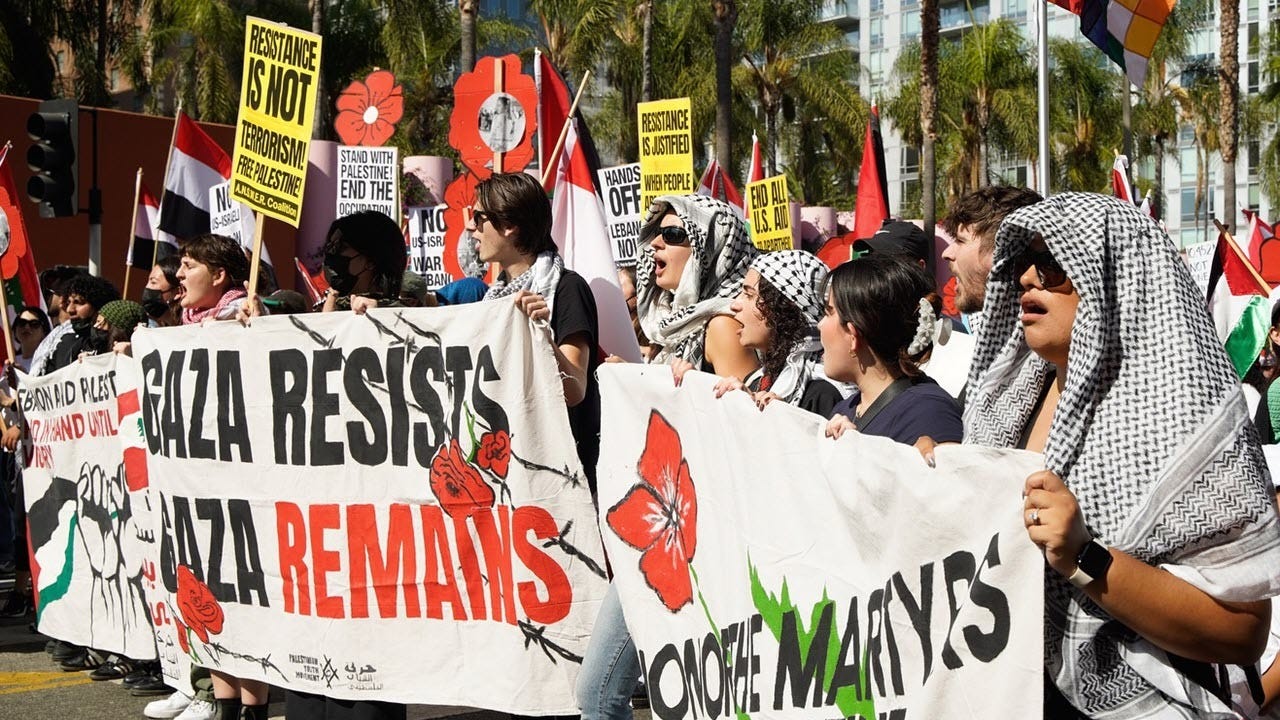
I understand why Australians are protesting in support of Palestine, and I support that impulse. At the same time, I feel really uncomfortable with the movement’s failure to distance itself from jihadist ideology and its double standard in tolerating extremism.
One of the many pro-Palestine activist groups recently posted about an upcoming protest with the headline, “Unite Against Antisemitism and Genocide,” but where was this stand against antisemitism before the Bondi Beach terrorist attack?
These groups also conveniently fail to identify the shooters as Muslim, but eagerly put the Muslim-identified hero at the centre of their message, when in reality multiple people risked their lives, and many of these were lost.

Don’t get me wrong, I’m not calling for the demonisation of Muslim identities, just highlighting another double standard. When identity politics is weaponised, it’s probably best to pick a strategy and use it consistently, not just in favour of a message.
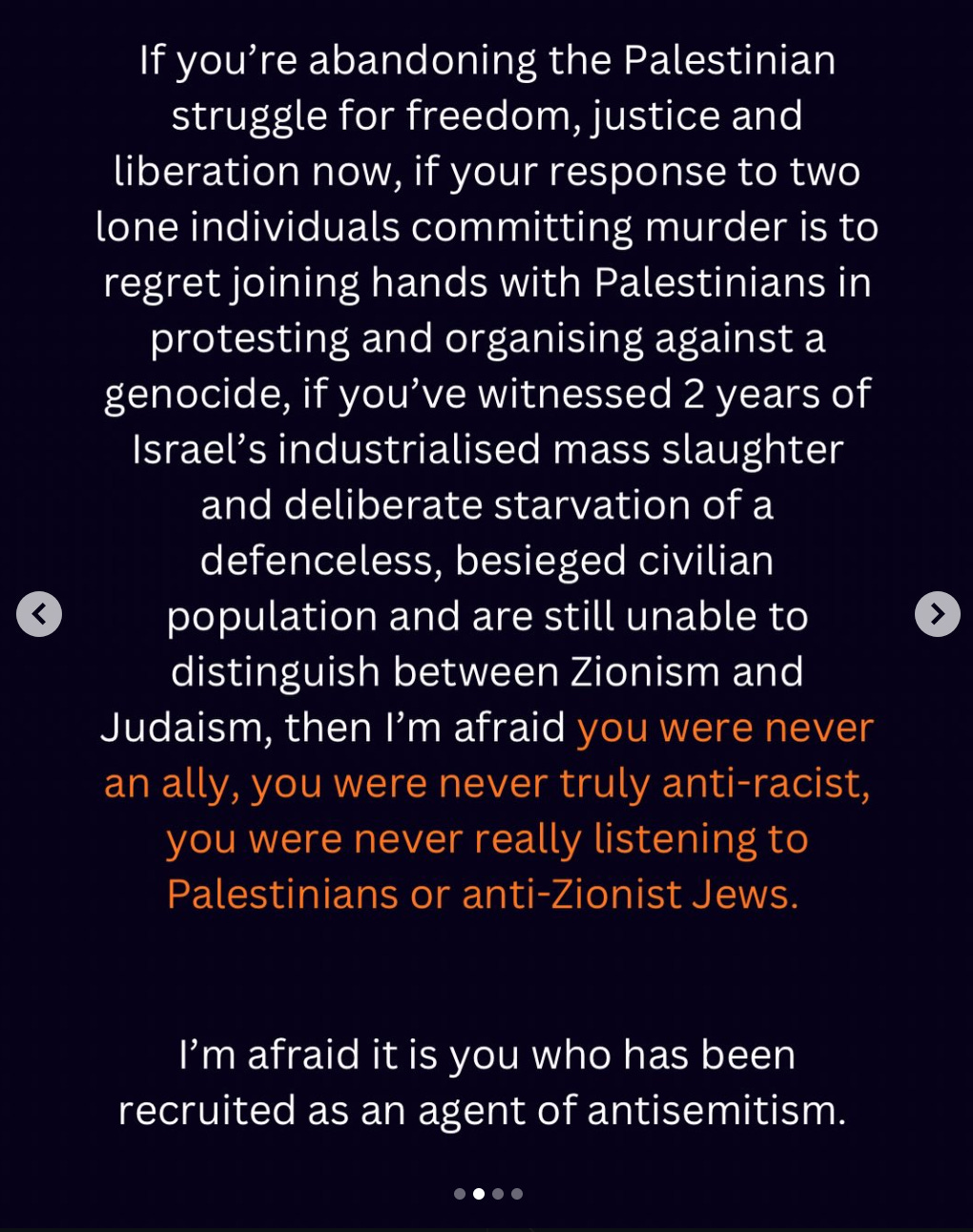
While our government distracts from the core issues (extremist ideology, the radicalisation process and the failure to intervene) by directing our attention to gun laws, grassroots advocacy groups are doing the same thing, by using a manipulative rhetoric designed to shame individuals into unwavering allegiance, saying things like, “you were never an ally, you were never truly anti-racist” at the slight hint of critical questioning.
The same attitude as those who cancelled me for asking questions or suggesting a different approach.
We know these two gunmen didn’t come out of nowhere, you can’t tell me their family, friends and community had no idea they were being radicalised. This doesn’t happen in a vacuum. They aren’t random mentally ill men who just woke up one day and couldn’t regulate their feelings (as suggested by some random on Instagram).
Look, I’m not a huge fan of identity politics, but being against it doesn’t mean we can’t talk about it, and it certainly doesn’t mean ignoring the real patterns of radicalisation or pretending extremism doesn’t exist. Whether it’s young men being drawn into jihadist networks in conflict zones, disaffected individuals falling into far-right extremism online, or any other form of violent ideology, radicalisation is a process that can affect any community.
The point is to recognise these threats without holding entire communities responsible for the actions of radicalised individuals.
So saying you’re against antisemitism is not enough, because both Islamic extremist and neo-Nazi movements exist in Australia (amongst others), and as both of these have presented themselves in more mainstream society, it’s no coincidence that reported incidents of antisemitism have more than quadrupled since the October 7th terrorist attack.
The Bondi Beach tragedy should prompt pro-Palestine movement leaders to reflect honestly on how extremist elements have attached themselves to what began as a humanitarian cause. Rather than defensively denying any connection, they need to actively work to identify and expel those who would weaponise legitimate advocacy for Palestinians as cover for antisemitism.
As Joshua Dabelstein so aptly put it, “The writing has been on the wall for a while.”
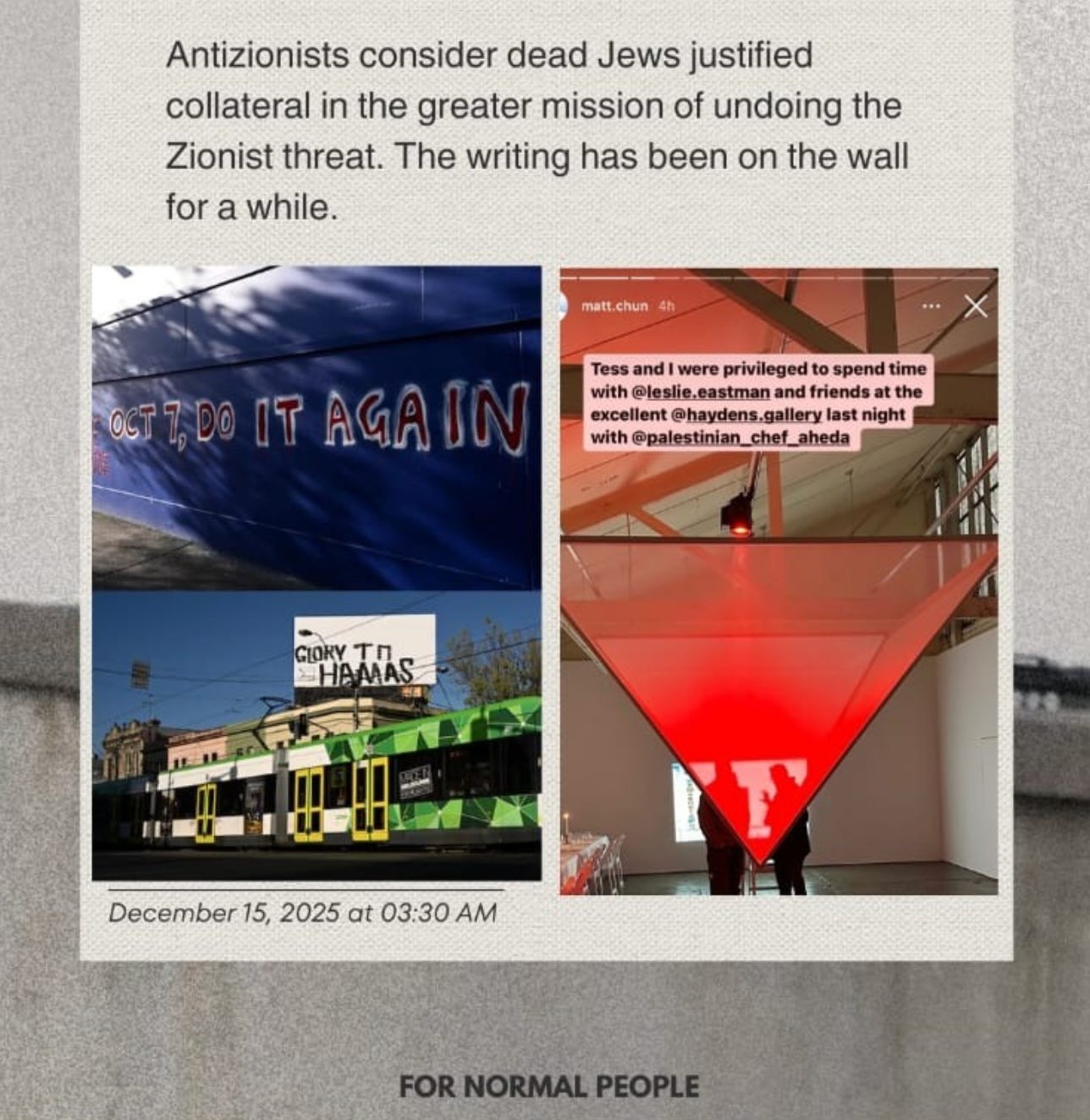
Rather than a direct causal link between the Bondi Beach attack and the pro-Palestine movement, I see a shared ecosystem of normalised antisemitism. The movement’s failure to confront Jew-hatred within its ranks, its tolerance for extremist rhetoric, and its insistence on treating all Jews as collectively responsible for Israel’s actions have created a climate where violent antisemitism can be rationalised as political activism.
Meanwhile, warnings from diaspora Jews have been dismissed as bad-faith attempts to silence legitimate criticism, obstacles to the ‘real’ cause rather than urgent alerts about a dangerous trajectory.
If the government had actually listened to the Jewish community, if they had treated Jewish safety as seriously as they claim to treat all forms of bigotry, perhaps ASIO would have intervened earlier. Perhaps security would have been heightened at the event.
Maybe Sydney would have shut down the radical Islamist group that hosted a 500-person conference just months ago. Maybe authorities would have scrutinised the networks that radicalised those shooters. But our leaders are paralysed by fear, too terrified of being called racist or Islamophobic by the left to confront extremism masquerading as diversity and inclusion.
Now we have armed police at synagogues and Jewish community events. None of us wanted this. But maybe if anyone had acted on those warnings years ago, those officers wouldn’t be necessary, and more people would still be alive.
We can’t know for certain. But refusing to have this conversation all but guarantees it will happen again.
I wasn’t sure about this bit, I’m still not sure - but it’s not being talked about, so here goes.
The Holocaust didn’t happen in ancient history; it happened within living memory. Six million Jews were systematically murdered. Entire communities were erased. Survivors emerged to find that country after country had turned them away before the war, and many still didn’t want them after.
We still have Holocaust survivors alive today (one was tragically a victim of the Bondi attack). People with numbers tattooed on their arms. People who watched their families murdered. And now, in 2024 and 2025, Jewish people are being attacked in Australia, Europe and the US, being told it’s justified because of Israel’s actions in Gaza.
The neat and tidy idea that the Israeli government is responsible for rising global antisemitism, as though Jewish communities worldwide should be collectively blamed for the decisions of a government they don’t control and often vehemently disagree with, is too convenient. This logic is both historically illiterate and morally bankrupt. It’s also textbook antisemitism (kinda gaslighty?) to blame Jews for the hatred directed at them.
This argument also conveniently ignores the role of Hamas in perpetuating this crisis.
Hamas has deliberately embedded military operations within civilian infrastructure, built extensive tunnel networks beneath homes, schools and hospitals, repeatedly rejected peace deals and two-state solutions, diverted and withheld humanitarian aid from its own population, committed deliberate acts of terrorism against civilians, and systematically indoctrinated generations with antisemitic hatred through schools and media. I feel like this is incredibly central to understanding why this conflict is so devastating and why civilian casualties have been so high. Holding Israel solely responsible while erasing Hamas’s strategic choices and stated goal just distorts the reality and weakens the cause.
Israel’s existence is rooted in centuries of persecution; the Holocaust was the culmination, not the cause, of European antisemitism. But Israel’s Jewish population isn’t just Holocaust survivors and their descendants.
Roughly 850,000 Jews from Middle Eastern and North African countries were expelled or fled to Israel in the 1950s-60s, communities that had lived in Iraq, Yemen, Morocco, and Egypt for centuries. There were also Jews already living in Palestine before WWII, and waves of Soviet Jews who arrived decades later.
When Jews had no state, they were blamed for being rootless cosmopolitans. Now that they have a state, they’re blamed for having one. When Israel’s government acts in ways we condemn (and remember, I do condemn Netanyahu’s actions in Gaza), Jews in diaspora are harassed, attacked, or told to “go back where they came from,” and this is the same scapegoating, just with updated justifications.
Then we have this ‘new’ form of antisemitism, called anti-Zionism, which I personally think is just a way to get the world to see the perpetrators of Jew hatred as the victims, but let’s entertain it anyway and consider the argument valid.
I thought Zionism meant the belief that Jewish people deserve self-determination in their ancestral homeland. Yet it’s been redefined by activists to mean ‘supporter of apartheid and genocide,’ making it nearly impossible for Jews to express any connection to Israel without being cast as complicit in war crimes.
Here in Australia, some of the people who celebrated or justified October 7th (rape, murder, kidnapping) are still around, still influential. They’re teaching at our universities, getting Australia Council grants, speaking at writers’ festivals. They’re celebrating the very ideology that’s making Australian Jews unsafe.
When we let “anti-Zionist” be treated like some kind of progressive credential instead of calling it what it is (an ideology that says Jews shouldn’t get to exist as a people) we can’t act shocked that synagogues in Sydney and Melbourne need armed guards, that Jewish schools have security checkpoints, that you can’t have a community event without police there.
Anti-Zionism is not just a criticism of Israeli policy; it is an eliminationist ideology that denies Jews the right to self-determination while cloaking itself in the language of social justice.
I’ve watched this same ideological pattern play out closer to home, and it’s made me realise how dangerous this kind of thinking becomes when left unchallenged.
I’ll be honest, the main reason I’m so fascinated with the way this is all rolling out is that I’m concerned about how some far-left activists approach decolonisation movements with more ideological fervour than critical thinking.
There’s a troubling pattern where the pro-Palestine movement and support for Aboriginal self-determination have become interchangeable causes without acknowledging the complexities.
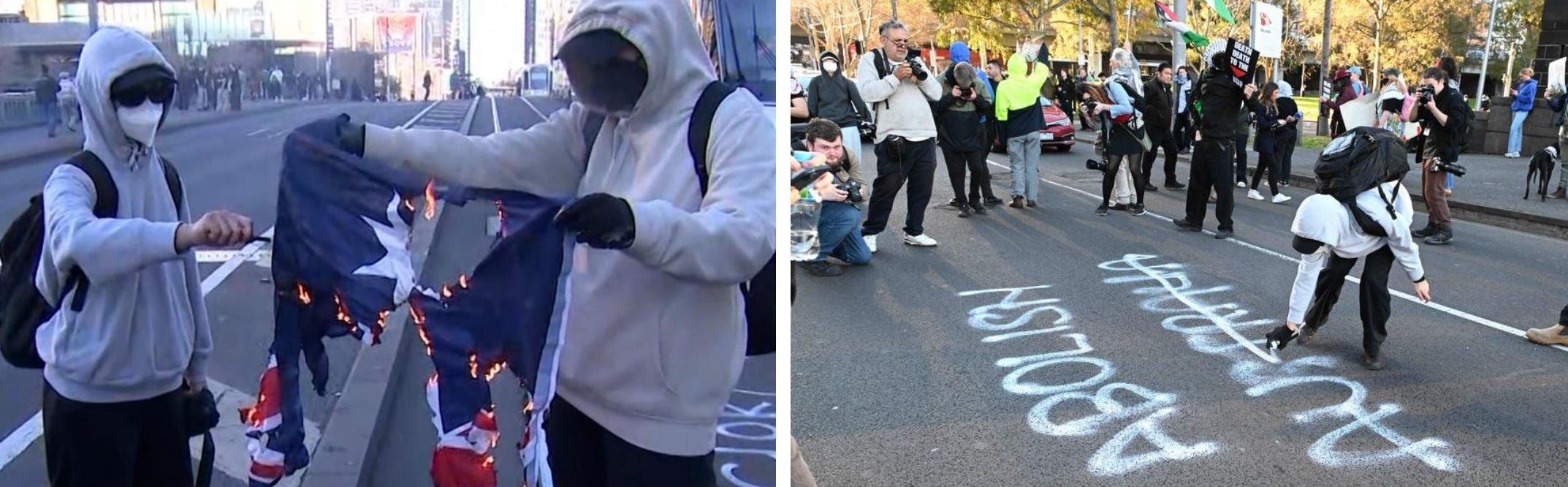
What does ‘Decolonise Australia’ actually mean? Why are these protestors piggybacking onto the pro-Palestine movement?
Treating them as interchangeable suggests this is more about adopting a fashionable political identity than genuinely understanding or helping either cause.
Surely, burning the Australian flag at rallies just fuels nationalist backlash and gives extremist movements like neo-nazis more ammunition for recruitment? Flag burning isn’t just resistance; it creates contempt! It alienates the mainstream! Do we really need more ‘proof’ that the left hates Australia?
I’m honestly not surprised the same people who blocked me for talking about this issue are the same ones who bullied me for advocating for rock climbing access at Mount Arapiles.
There is a totally unrealistic expectation that I should, without question, accept massive closures to rock climbing access to prove I support Aboriginal self-determination.
Of course, the irony is that these protesters champion Indigenous self-determination while conveniently reframing Jewish self-determination as colonisation. Whatever fits the narrative.
It’s absolutist thinking with no understanding of consequences. Questioning a movement that glorifies a terrorist organisation? That makes me a genocide supporter, apparently. If buying property in Natimuk makes me a coloniser, what does that make James Cook? If advocating for respectful access to nature is racist, then what’s Adolf Hitler?
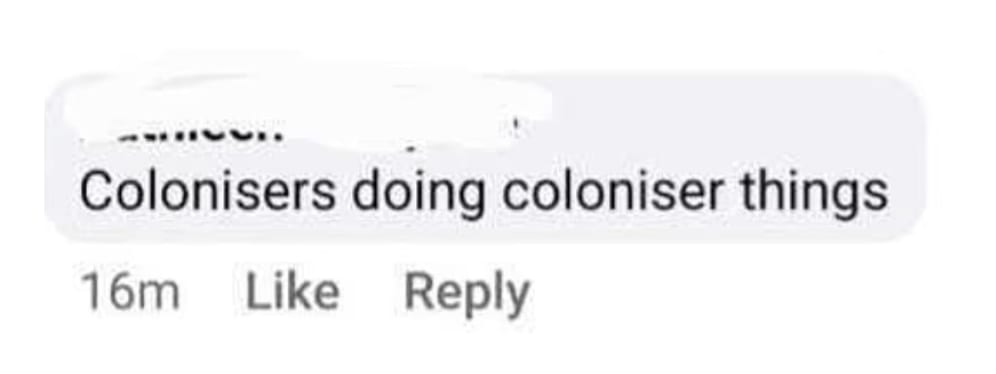
The far left has corrupted diversity and inclusion, and now they're draining words like genocide, coloniser, and racist of all meaning. When everything is the worst thing, nothing is, and we lose our ability to call out actual atrocities.
Sure, there’s the argument that because Netanyahu uses ‘Zionism’ to shield himself from criticism, it justifies weaponising the term against anyone who identifies with it. But that’s just fighting fire with fire.
Zionism was coined in 1890 and historically encompassed Labor Zionists, Socialist Zionists, Cultural Zionists, and Religious Zionists! All of these movements often disagreed about what a Jewish homeland should look like. Early Zionists specifically warned that the movement could only succeed if it respected the rights of Arabs already living in the land. It’s Netanyahu who has collapsed this diverse, century-old movement for his specific vision: right-wing, expansionist, security-maximalist.
So if we let Netanyahu define what Jewish connection to Israel means, then aren’t we handing him ownership of the term? Aren’t we enabling the erasure of a century of internal Jewish debate?
When anti-Zionist activists accept that same definition (just with the values inverted), they’re playing his game. Both sides benefit from flattening Zionism into ‘support for current Israeli government policy’ because it eliminates the middle ground.
We don’t let the Chinese Communist Party define what it means to be Chinese. We don’t let the Iranian regime define Islam. We recognise that governments can betray the very principles they claim to represent.
Just as believing in Palestinian self-determination shouldn’t require defending Hamas.
Sure, I’m aware there are anti-Zionist Jews, but that’s not my point. My point is it’s not up to non-Jews to decide the conditions under which other Jews are allowed to express their identity, heritage, or connection to Israel without being demonised.
It goes without saying that having an ancient historical connection to a region doesn’t justify displacing people currently living there, and Palestinians absolutely have indigenous status and deep roots in Gaza; both peoples have legitimate historical ties to the land.
So why are we chanting as if only one group of people belong there?
As I have said previously, I condemn settlement expansion and oppose Netanyahu’s government and actions, but I am not going to do it by treating an entire people as illegitimate colonisers who don’t belong, or rewriting and erasing Jewish history.
The Rise in Antisemitic Violence Since October 7th, 2023
In Australia, reported incidents of antisemitism have almost quadrupled since October 7th, rising from 495 incidents in the year prior to 2,062 incidents between October 2023 and September 2024. These incidents include:
October 9, 2023: About 1,000 anti-Israel demonstrators marched to Sydney Opera House, reportedly chanting “F*** the Jews,” “Where’s the Jews?,” and “Gas the Jews”.
October 2023: A 44-year-old Jewish man in Sydney was called a “Jew dog” and assaulted in a public park by three males, sustaining a concussion and fractures to his spine.
October 8, 2023: Two individuals walked past a synagogue in NSW and shouted “Allahu Akbar,” before saying they would “blow up the synagogue”.
November 2023: A large mob of anti-Israel protesters descended on a Melbourne synagogue on Friday evening, and rocks were thrown at Jews, and the synagogue had to be evacuated for the congregants’ safety.
Mount Scopus Memorial College in Melbourne was vandalised with “Jew die” spray-painted on the exterior fence.
Fifth graders on a field trip to Melbourne Museum were targeted by older students who called them “dirty Jews” and “baby killers,” chanting “Free, free Palestine”.
February 2024: The contact details of more than 600 Australian Jewish creatives and academics on a private WhatsApp thread were leaked by anti-Zionist activists, with many losing their jobs or having their businesses targeted, forcing some to move neighbourhoods for safety.
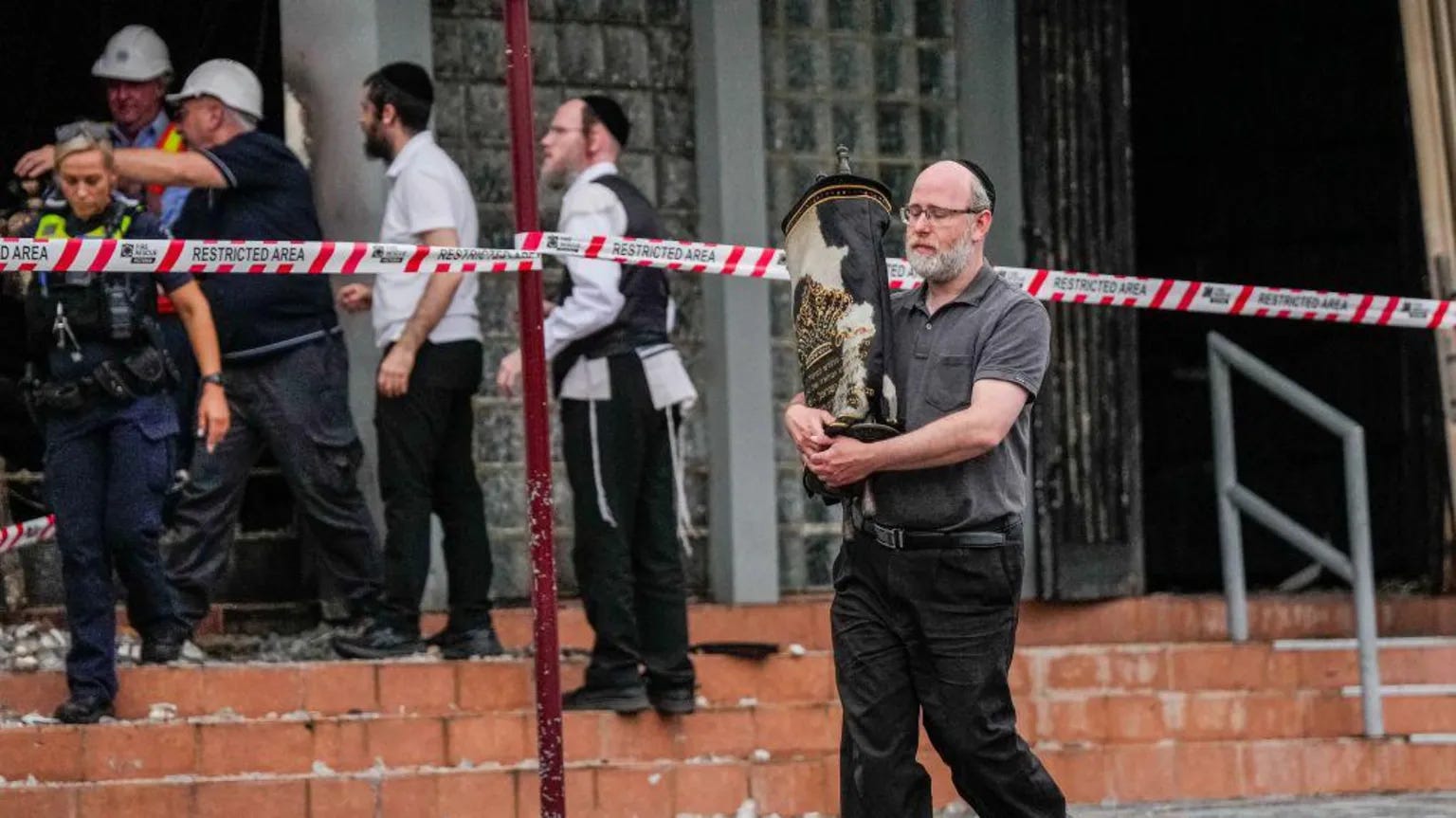
December 2024: Arsonists firebombed the historic Adass Israel Synagogue in Melbourne while congregants gathered for morning services, causing at least one injury and extensive damage. Federal authorities later alleged Iranian involvement.
July 2025: A fire was set at the East Melbourne Hebrew Congregation synagogue when worshippers were inside.
The front door of Curly Lewis Brewing Company near Bondi Beach was deliberately set on fire. Police later linked the arson to antisemitic attacks, though the brewery was likely mistakenly targeted instead of a nearby kosher establishment.
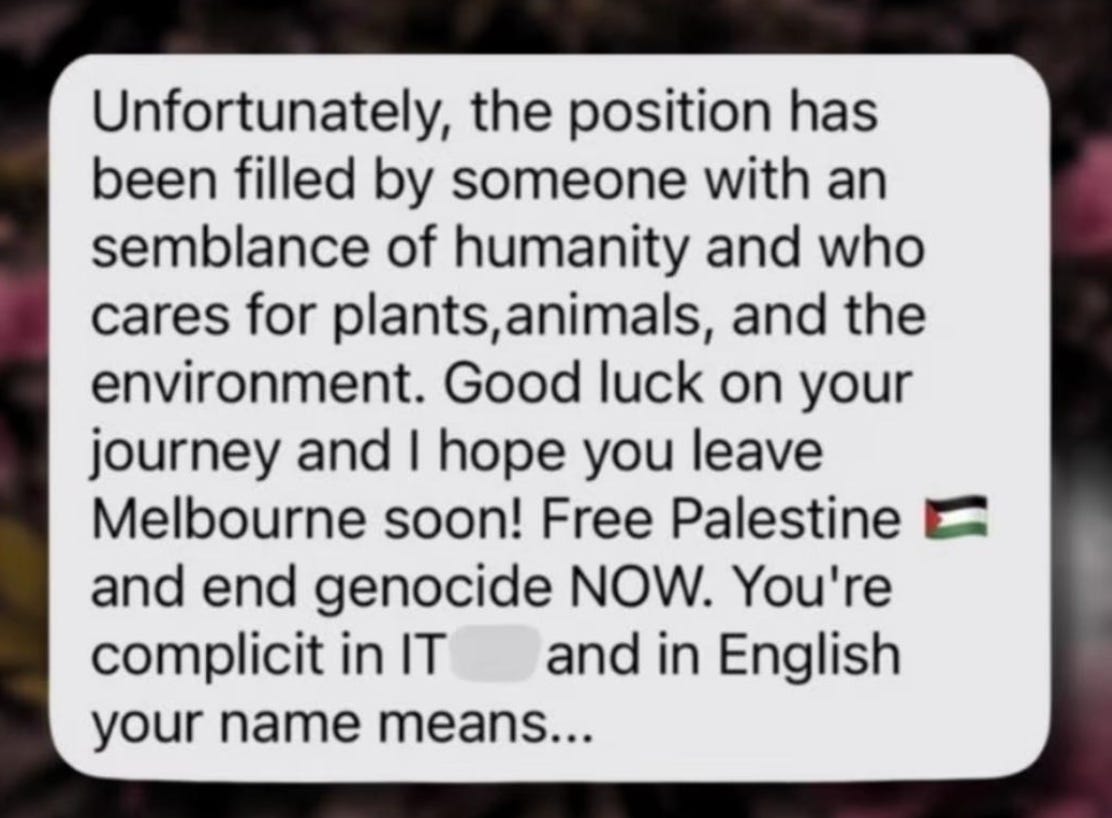
A 24-year-old Israeli woman was rejected from a job at a Melbourne nursery with a text message telling her she lacked “a semblance of humanity,” was “complicit” in genocide, and should leave Melbourne, with the owner adding “Free Palestine and end genocide NOW”.
A car was set on fire in a Jewish community in Sydney, and homes in the area were vandalised with antisemitic graffiti.
Major property damage was inflicted on a childcare centre near a Jewish school and synagogue in Sydney during an arson attack, with antisemitic graffiti found inside.
Two Sydney-based Bankstown Hospital healthcare workers threatened an Israeli man on social media, saying they would murder Israeli patients.
“For two years, we were dealing with vandalism, harassment, posters that were anti-Israel, anti-Zionist, or straight-up antisemitic. Graffiti on the windows or around the shop. Basically, that was our reality almost every week - five or six days out of seven - for two years.” - Ed Halmagyi, Avner’s
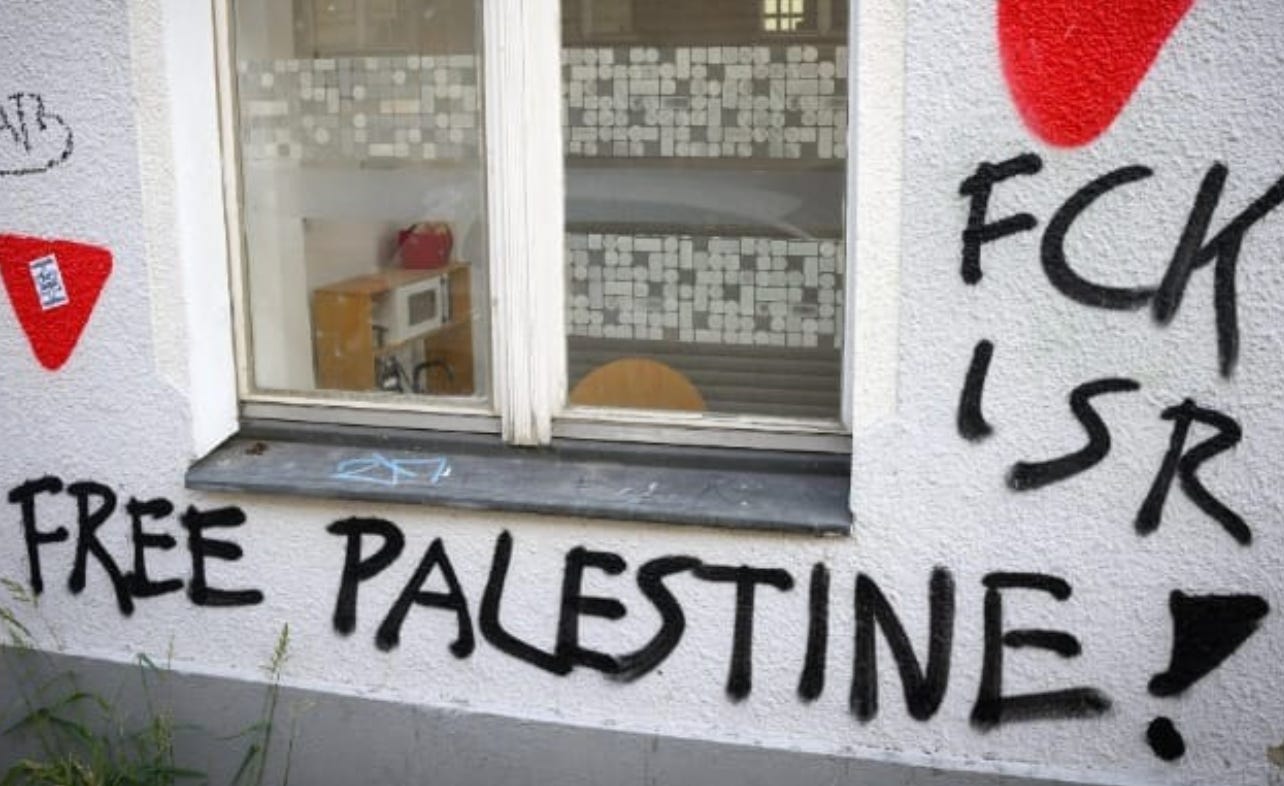
Would we tolerate the same towards another group? If there was video recording of hospital workers threatening to kill trans people, everyone would be up in arms! How about if racist graffiti or arson attacks were directed towards Chinese-owned businesses? Or if young black African kids were called the ‘N’ word at school? So why is it okay to treat Jewish people in our community this way?
Pre-Bondi terrorist attack, not once did I see a pro-Palestine activist group publicly acknowledge and condemn this behaviour.
These incidents go beyond advocating for Palestinian rights. When the response isn’t targeted at government policy or institutional complicity, but instead at individual Jews in diaspora and Israeli civilians with no connection to military or political power, what we are witnessing is collective punishment rooted in xenophobia and racism.
Similarly, the call to boycott artists and musicians like Infected Mushroom and Israeli singer Noga Erez represents a significant departure from the stated principles of the BDS movement. How does boycotting a psytrance band have anything to do with boycotting Israeli state institutions?
Is Noga Erez profiting from settlements and state-sponsorship that explicitly serve as propaganda for Israeli policies? Since when did it become acceptable to target artists simply based on national origin? Arguing that she is a former IDF soldier is also irrelevant and short-sighted, considering military service is mandatory in Israel for most Jewish, Druze, and Circassian citizens, both men and women, upon reaching age 18. But sure, let’s pretend conscription equals ideology.
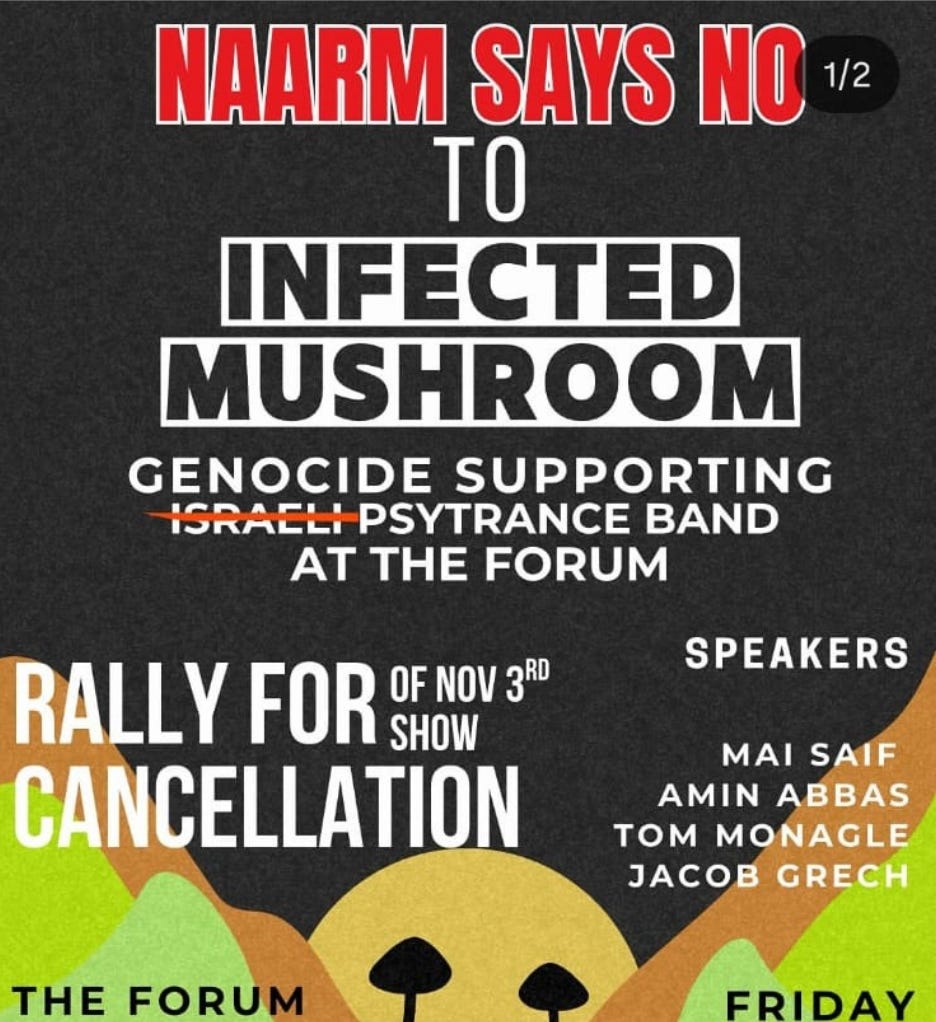
Absolutely, boycott Caltex, Microsoft, Booking.com and Pizza Hut, this could pressure Israel to comply with international law by applying economic and political pressure.
But Erez, an electronic pop artist who has been openly critical of Israeli government policies, revealed in December 2024 that many of her scheduled festival and media appearances abroad had been cancelled simply because she is Israeli, stating explicitly that it was “not for anything that I said, it’s simply because I was born where I was born.”
Doesn’t this contradict the universal values many Palestine solidarity activists claim to uphold?
Overseas, it’s even worse:
October 2023, Milan: Anti-Israel protesters shouted “Open the borders so we can kill the Jews”.
A Jewish woman was stabbed in Lyon, France, and a swastika was graffitied on her home.
May 2024, Auschwitz-Birkenau: Pro-Palestinian protesters disrupted the March of the Living on Holocaust Remembrance Day, with October 7 survivors present.
June 2024, Los Angeles: Pro-Palestinian protesters blocked the Adas Torah synagogue, physically assaulting Jewish congregants with bear spray and punches.
A 12-year-old Jewish girl was gang-raped in Courbevoie by three boys (aged 12-13) who called her a “dirty Jew,” questioned her about Israel and Palestine, and told her they were “taking revenge for Palestine.” The attackers admitted the attack was motivated by her being Jewish.
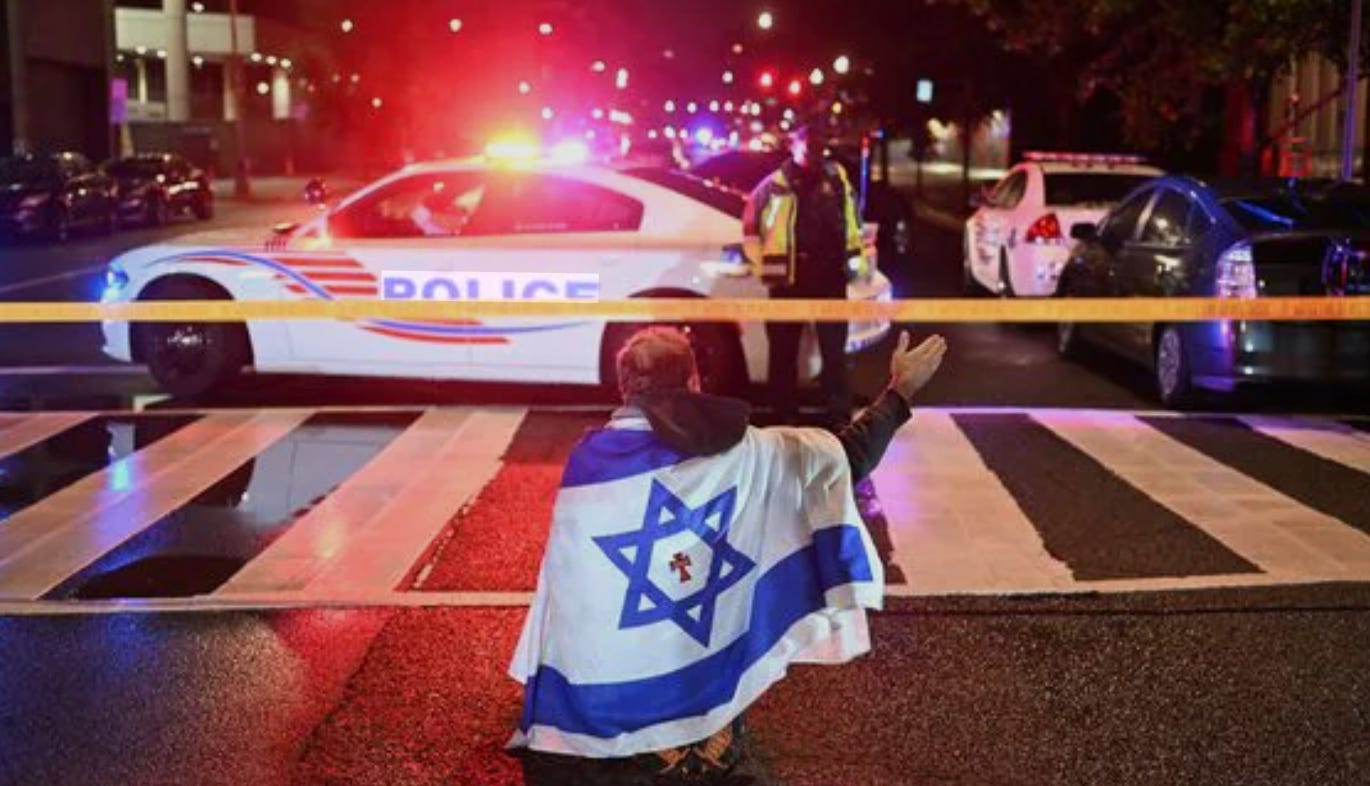
August 2024, La Grande-Motte, France: A 33-year-old Algerian man set fires at the Beth Yacoov synagogue, attempting to burn it down, saying he attacked in support of Palestine.
Washington D.C. shooting (May 2025), two Israeli Embassy staffers, Yaron Lischinsky and Sarah Milgrim, were fatally shot outside the Capital Jewish Museum by Elias Rodriguez, who shouted “Free, free Palestine” as he was arrested.
London, UK: Three men accosted Jews speaking Hebrew, asked if they were Jewish, chanted “Free Palestine” and “Fuck Jews,” then summoned 15-20 others who physically attacked them.
July 2025, Milan: A mob attacked a visibly Jewish man and his son, yelling “Free Palestine,” “murderers,” and “genocide.”
Paris, France: A group of teenagers on the subway sang “F--- the Jews... Long live Palestine, We are Nazis and proud”.
These are not isolated incidents. This is a coordinated pattern of violence targeting Jews worldwide, rationalised by a conflict happening thousands of kilometres away that most of these victims have no connection to.
Then there are the slogans. "Globalise the Intifada" isn't a call for Palestinian statehood; it's a call for violent resistance against Israelis and Jews everywhere. Those hiding behind dictionary definitions, claiming the phrase carries no violent connotations, are being willfully ignorant.
In can’t help but notice these are the same people who insist words are violence, who celebrated Charlie Kirk’s assassination (with educators posting things like “Hope the bullet’s OK” and rapper Bobby Vylan saying at a concert “The pronouns was/were. Because if you talk shit, you will get banged.”) simply because he had conversations they disagreed with. Claiming that the historical context of “Globalise the Intifada” doesn’t matter, they invoke meaning when it suits them and discard it when it doesn’t. The hypocrisy is staggering.
Reality is, the most prominent expressions of intifada have been through violence. The second intifada included suicide bombings that killed hundreds of Israeli civilians. Is this really something we want globalised?
Same with the phrase “From the River to the Sea”, sometimes coupled with “by any means necessary” which supporters insist is merely geographical, with no antisemitic implications. This phrase has been consistently used to advocate for Israel's eradication and the removal of Jews from the region, a genocide, the very thing advocates claim to oppose. I’m not buying it.
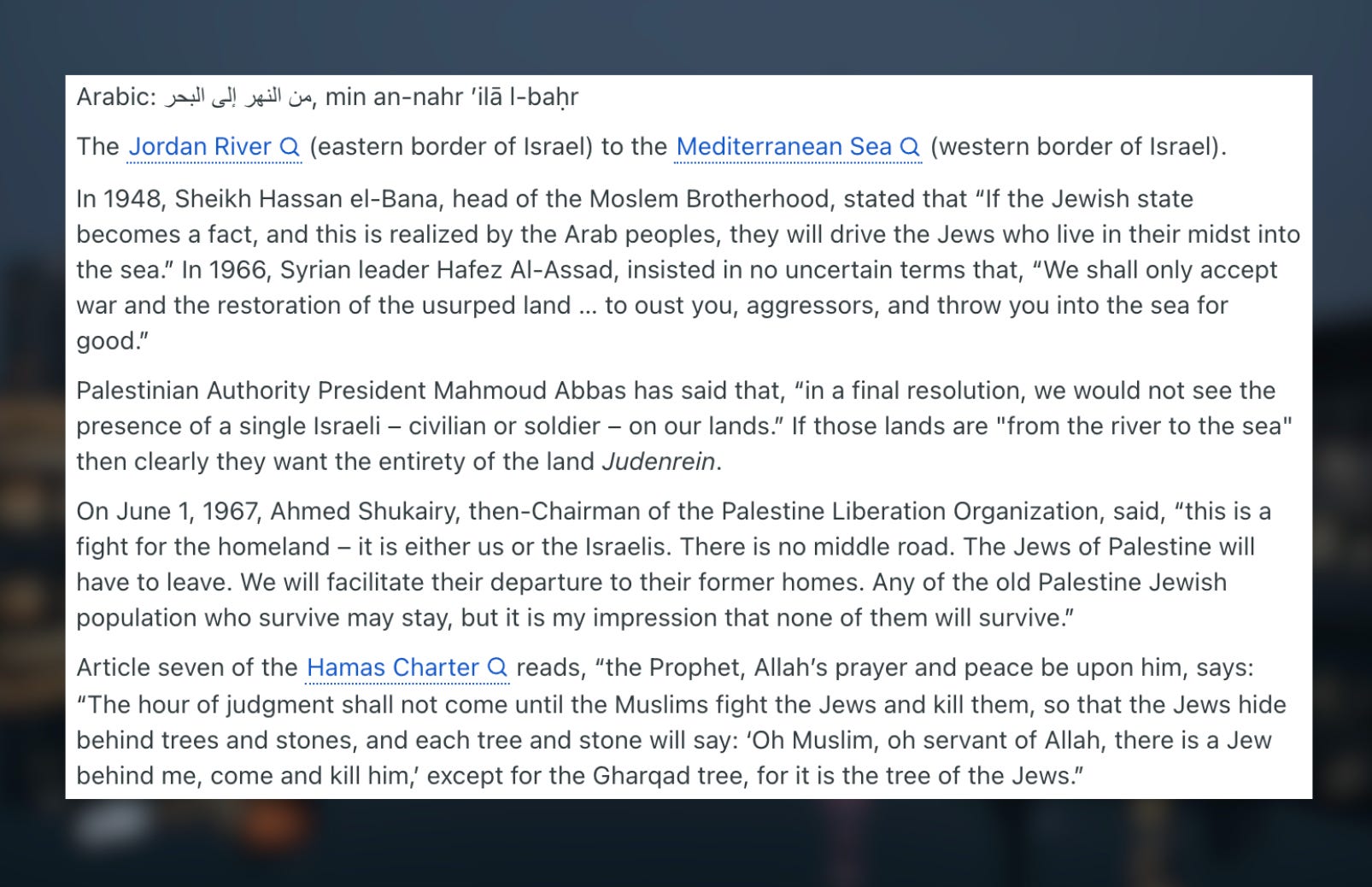
These slogans create an environment where Jewish people (whether or not they support Israeli government policy) feel unsafe. This is one of the ways the movement has normalised antisemitism.
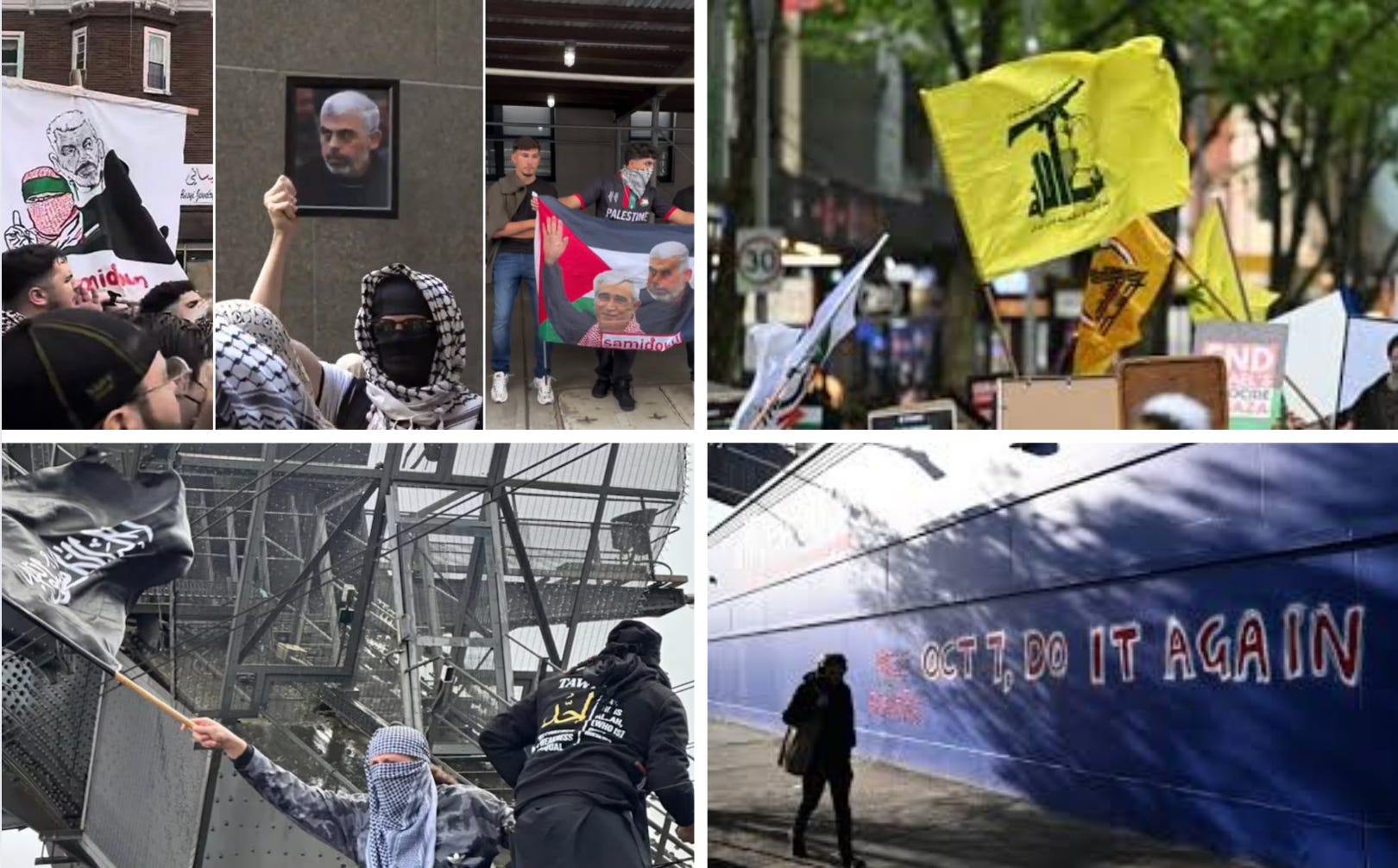
There has been a small but disturbing tolerance of overt Islamist extremism at protests. Examples include:
Protesters honouring Hamas leader Yahya Sinwar on banners
Wearing Hamas-style headbands
Referencing Nazism and using the Nazi salute
Waving Hezbollah and Taliban flags
Burning the Australian flag and calling to abolish Australia
Celebrating the one year anniversary of Hamas’s October 7th terror attack, which killed 1,200 people, including 36 civilian Israeli children
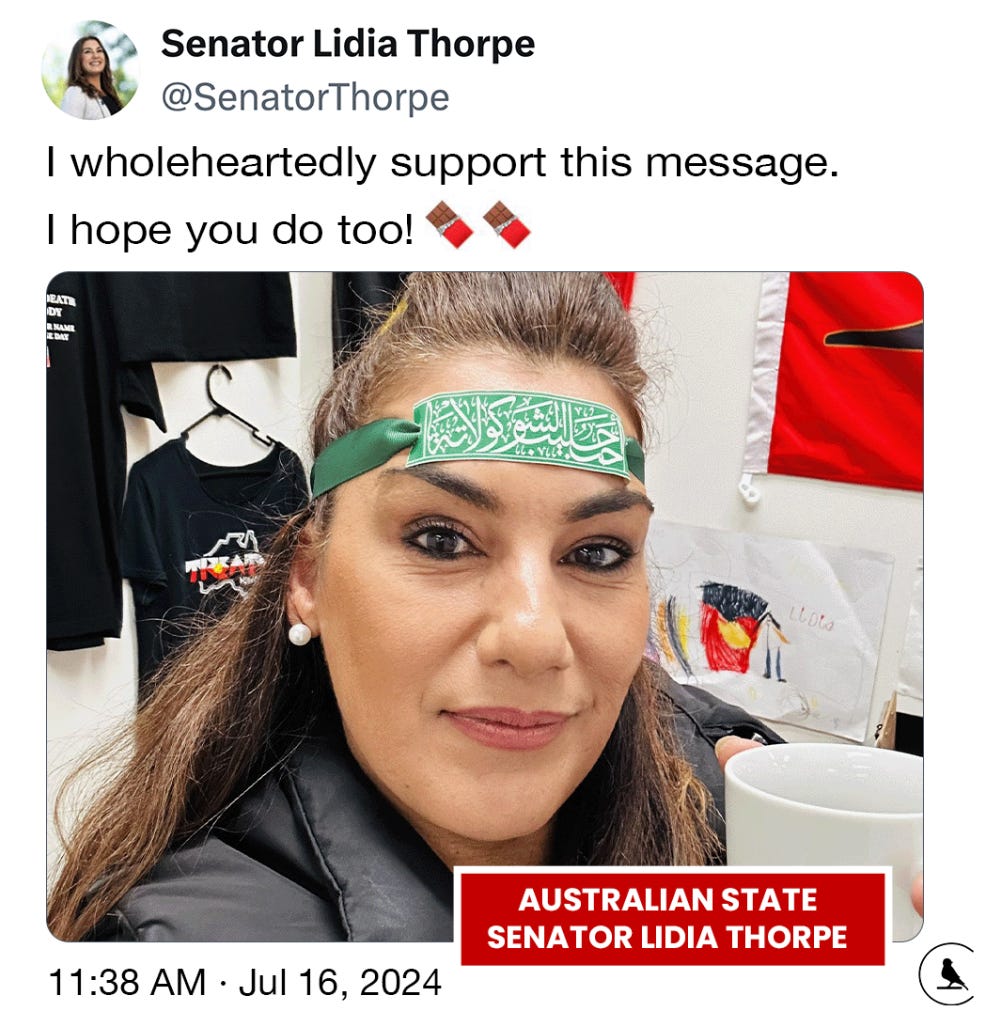
How did society get to a place where the death of 1,200 people is celebrated? All in the name of humanitarian protest. Some will argue this cannot compare to Palestinian suffering, but I’m not comparing tragedies.
I’m asking, how did support for a humanitarian cause become intertwined with extremist ideology and antisemitic violence, and why hasn’t the movement taken responsibility for this?
When non-Muslim Western protesters adopt the keffiyeh and chant “Allahu Akbar” while displaying Hamas imagery, they’re not simply showing cultural solidarity by wearing a scarf; they’re embracing the religious framework of Islamist militancy.
When these extremists joined in without condemnation from protesters, the march across Sydney Harbour Bridge stopped being a peaceful protest and became a platform for extremism. And Jewish people in Australia bore the consequences.
I absolutely understand this is a small percentage of people, and if there is anything I have learnt in the last year advocating for access at Mount Arapiles, it is that we can’t control other individuals from behaving in disgraceful, hateful and extremist ways. But that doesn’t mean we can’t draw a clear line.
Australia has a very real double standard when it comes to condemning extremism across different groups of people.
Just one month ago, Hizb ut-Tahrir, a radical Islamist group banned in at least 13 countries, including the UK, Germany, Turkey, Saudi Arabia and Egypt, hosted a conference in Sydney titled “Islam: The Change the World Desperately Needs.”
The event explicitly promoted the replacement of democratic governance with Islamic rule and used the war in Gaza as propaganda to legitimise extremist ideology. Over 500 people reportedly attended. The location of the event has not been publicly disclosed.
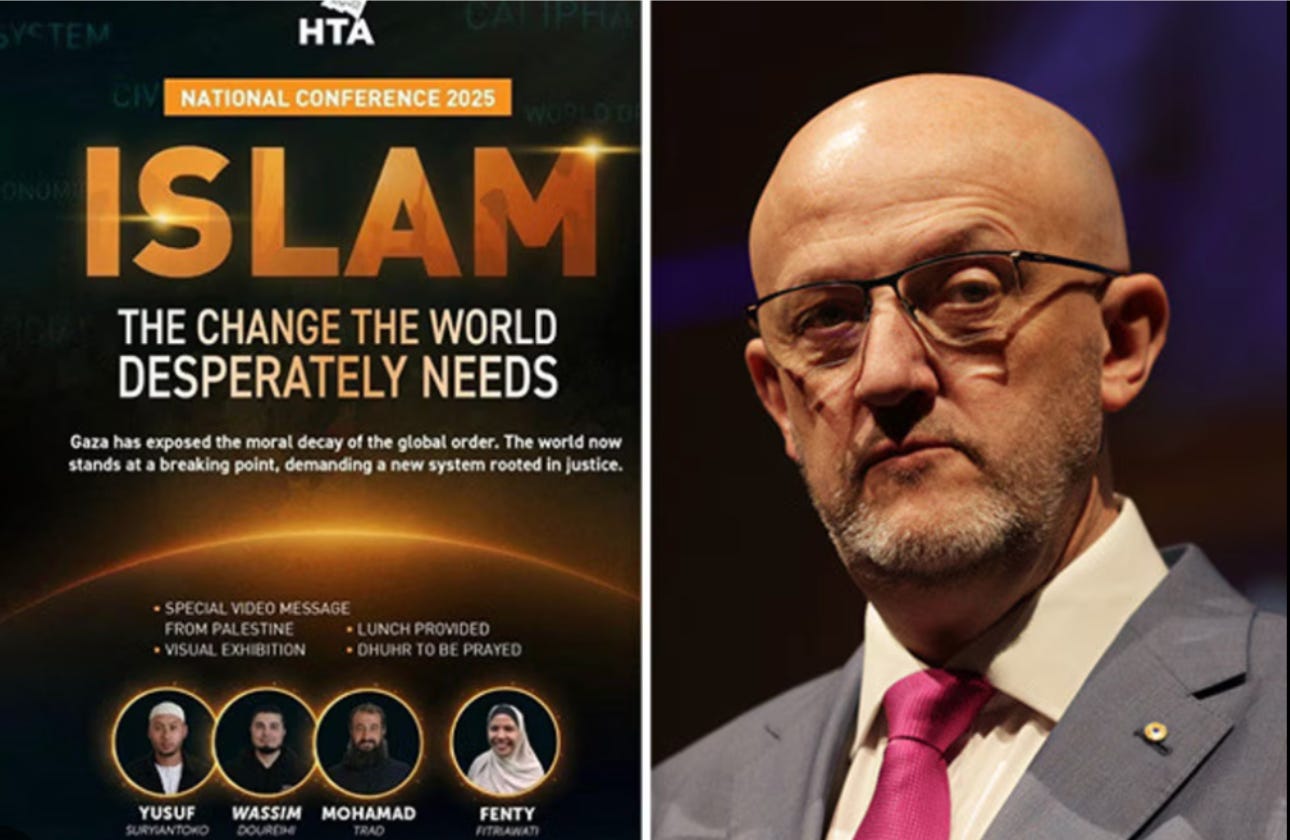
Now imagine if 500 neo-Nazis had attempted to host a conference in Sydney promoting the replacement of Australian democracy with fascist governance. Would that event have proceeded?
The contrast is stark. When neo-Nazi groups like the National Socialist Network have attempted far smaller gatherings (60 members detained at North Sydney station, 40 members at rallies), police have aggressively intervened, issued public safety orders, and threatened arrests. Premier Chris Minns declared neo-Nazis would be “met with overwhelming force from the NSW Police” if they tried again.
Yet a 500-person conference by a group whose UK ban was justified by Home Secretary James Cleverly as “actively promoting and encouraging terrorism, including praising the October 7 attacks,” proceeded with a venue change and no intervention.
At what point do we start to acknowledge that Islamist extremism in Australia is not marginal, but growing, and doing so openly? Only weeks earlier, ASIO expressed concern about Hizb ut-Tahrir, but they continue to operate in Australia.
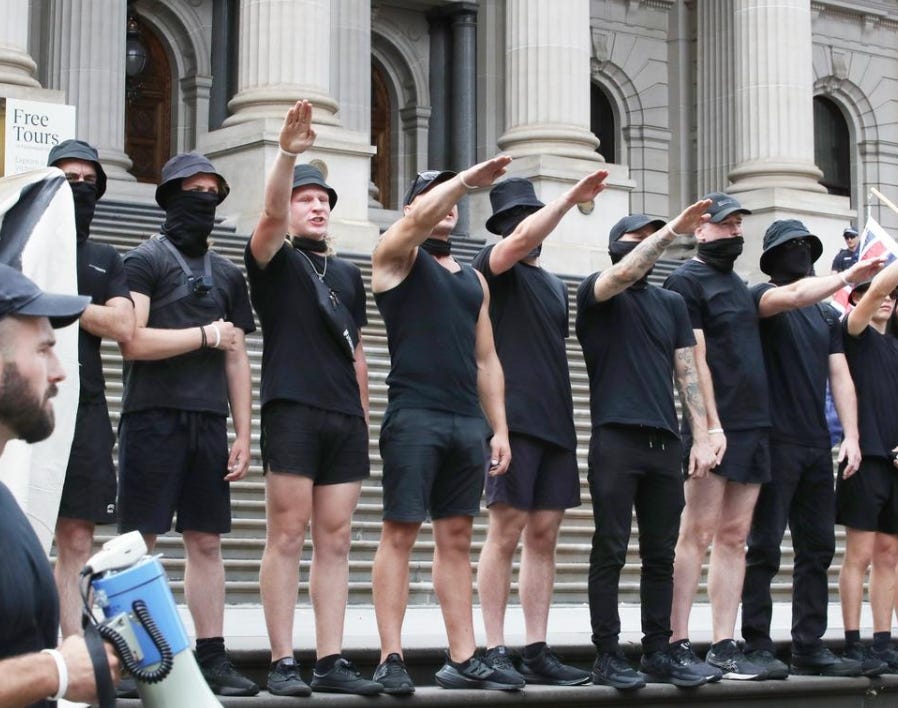
This double standard creates an environment where one form of extremism is met with appropriate force, while another is allowed to operate and recruit.
Islamist ideology is uniquely potent when it merges religious authority with violence and political power, and it explicitly claims divine authority, shielding itself from criticism, reform, and accountability.
I say this as someone who considers themselves politically left-leaning and has worked directly to create equity for people from diverse backgrounds, minority and underrepresented groups. Precisely because of that experience, I believe we cannot accept every ideology and religion without scrutiny if it is incompatible with democracy, equality, and coexistence.
Freedom of religion does not mean freedom from criticism. Just as freedom of movement does not permit trespassing, freedom of speech does not mean freedom from consequences.
I apply this same scrutiny to all ideologies, religious or otherwise. When Christian nationalists advocate theocracy or commit violence, I oppose that too.
The question isn’t whether Islam is uniquely problematic; it’s whether we’re willing to have honest conversations about where any ideology conflicts with liberal democratic values, and whether the pro-Palestine movement is willing to take responsibility for the extremist elements that have attached themselves to it.
I believe we should be advocating for civilian life on all sides, holding all armed actors to the same standards, and pushing for a ceasefire, humanitarian access, and a negotiated peace that recognises both peoples’ right to safety and self-determination.
The pro-Palestine movement needs to take responsibility for:
1. Actively protecting Jewish people from antisemitic violence
Not just issuing statements. Not just saying “we’re against antisemitism.” Actually taking action when extremist symbols appear at protests. Actually condemning violence against diaspora Jews without qualification or “but.”
2. Rejecting and ejecting extremist ideology
Drawing clear lines against Hamas glorification, terrorist flags, and Islamist extremist groups. Recognising that allowing these elements to march alongside you makes Jewish people unsafe - and that’s not acceptable for a human rights movement.
3. Acknowledging complexity
Recognising that both peoples have legitimate claims, both have suffered, and both have committed wrongs. That Hamas is a terrorist organisation. That Arab states bear responsibility for perpetuating the refugee crisis. That Jewish indigeneity is real.
4. Demanding equal standards for all extremism
If we’re going to meet neo-Nazis with a certain level of force, we need to apply the same standard to Islamist extremist groups like Hizb ut-Tahrir. The double standard is untenable.
The recent photograph of Rabbi Kamins from Emanuel Synagogue and Bilal Rauff from the National Imams Council embracing after speaking together at a vigil for the Bondi attack victims demonstrates that reconciliation is achievable when leaders choose courage.
Yet symbolic gestures, however moving, cannot be endpoints. They must catalyse sustained action.
Unless that embrace translates into interfaith initiatives, policy advocacy, and sustained community dialogue, unless it results in concrete action to protect Jewish people from violence, we risk reducing profound human connection to mere performance.
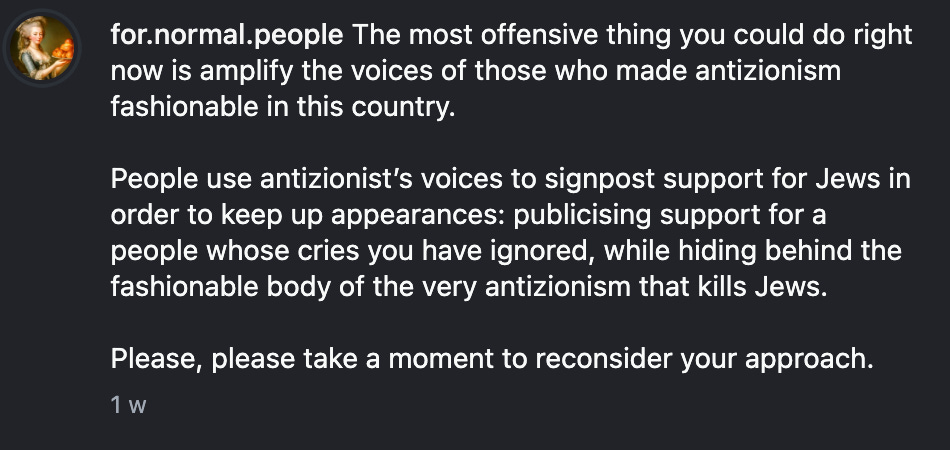
Of course, a fair challenge is that correlation does not equal causation: we cannot prove the Bondi attack was directly influenced by pro-Palestine activism, and radicalisation pathways are complex. It is valid to argue that the pro-Palestine movement is not a single entity and that expecting decentralised movements to perfectly police extremist symbols may be unrealistic.
I take those critiques seriously. I am still learning and genuinely willing to listen. But avoiding hard conversations is how we end up here again.
Right now, I see very few people willing accept that many things can be true at once. It is possible to:
Support Aboriginal self-determination while critically examining how treaty processes are being implemented.
Stand in solidarity with trans and gender-diverse people while questioning medical transition for minors.
Protect cultural heritage and environmental values while scrutinising decisions that restrict public access to nature.
Uphold Palestinian human rights while rejecting one-sided political campaigns that excuse Hamas and fail to protect Jewish people from antisemitic violence.
Acknowledge that Israel’s actions have not been purely defensive while also insisting that diaspora Jews should not bear the consequences of Israeli government policy.
Israel has a right to exist and be secure, and Palestinians have a right to live freely where they are. Jewish people in diaspora have a right to safety regardless of what the Israeli government does. Two wrongs don’t make a right.